3 things about clutter you probably haven’t heard
you’ve probably heard ALL the usual advice about clutter:
- get rid of anything you haven’t used in a year.
- make three piles: keep, donate, toss.
- ask yourself whether something sparks joy.
- start with a drawer. set a timer. buy fewer baskets.
I suggest most of it, too!
but after 20+ years of walking through people’s homes and paying attention to what they keep, where they keep it, and how they feel about it, I’ve collected a few observations that rarely make it onto a decluttering checklist.
here are three I wish everyone understood…
no. 1: SOMETIMES THE STUFF ISN’T THE PROBLEM. THE CONVERSATION IS.
I read a New York Times opinion piece about clutter this week, and it reminded me of something I’ve heard from women more times than I can count: “oh, it’s not my stuff. it’s my husband’s.”
the article made a point worth remembering: our belongings can act as cues that activate memories.
which means the thing you see as unnecessary might help someone else remember a person, a place, an accomplishment, or a version of themselves they don’t want to forget.
so instead of “WHY are you keeping this?” try “what does this remind you of?”
instead of “you haven’t used this in 15 years,” try “tell me the story behind it.”
and to be clear, I’m not saying every sentimental possession deserves permanent residence, but curiosity almost always gets you further than judgment.
no. 2: YOU’RE NOT JUST CLEARING CLUTTER. YOU’RE CONFRONTING YOU!
if I had a mountaintop, this would be sermon-worthy: the hardest part of clearing clutter isn’t the physical labor. it’s the sheer number of decisions and expectations attached to your things.
the exercise equipment came with the expectation you’d work out regularly. the expensive craft haul came in the door with the expectation you’d make time to create. the gift came home with the expectation you’d LOVE it.
whenever expectations aren’t met, we arrive at disappointment – and, yet, when it comes to ‘things’, we resist releasing the evidence. instead, we tuck it into a closet, drawer, garage, or attic with the signature blow: “I’ll deal with it later.”
except ‘later’ becomes a mountain of postponed decisions.
in my courses, we talk about predecessor chi – the energy left behind by previous occupants of a space. I also encourage students to consider their own predecessor chi.
every time you tuck something away rather than decide, you’re storing an emotional moment right alongside it.so when you finally open that closet, you’re not just confronting belongings. you’re meeting previous versions of YOU…
the one with big plans. the one who felt obligated. the one who was overwhelmed. the one who couldn’t bear to waste the money.
no wonder it’s exhausting.
you’re expecting yourself to process months (sometimes YEARS!) of postponed decisions in a single weekend.
my advice? stop treating clutter like a physical endurance challenge. work in smaller increments. five meaningful decisions might accomplish more than five donation bags filled on autopilot.
no. 3: A CLEAN SPACE ISN’T NECESSARILY AN ENERGETICALLY CLEARED SPACE.
you’ve sorted, donated, tossed, organized, and wiped everything down. your closet is minty fresh.
WOLF WHISTLES!
before you put a single thing back, one more suggestion: clear the energy, too.
in my Feng Shui practice, it’s just as important to clear the energy you don’t see – which is the space itself, especially when an area has been harboring avoidance, frustration, or overwhelm.
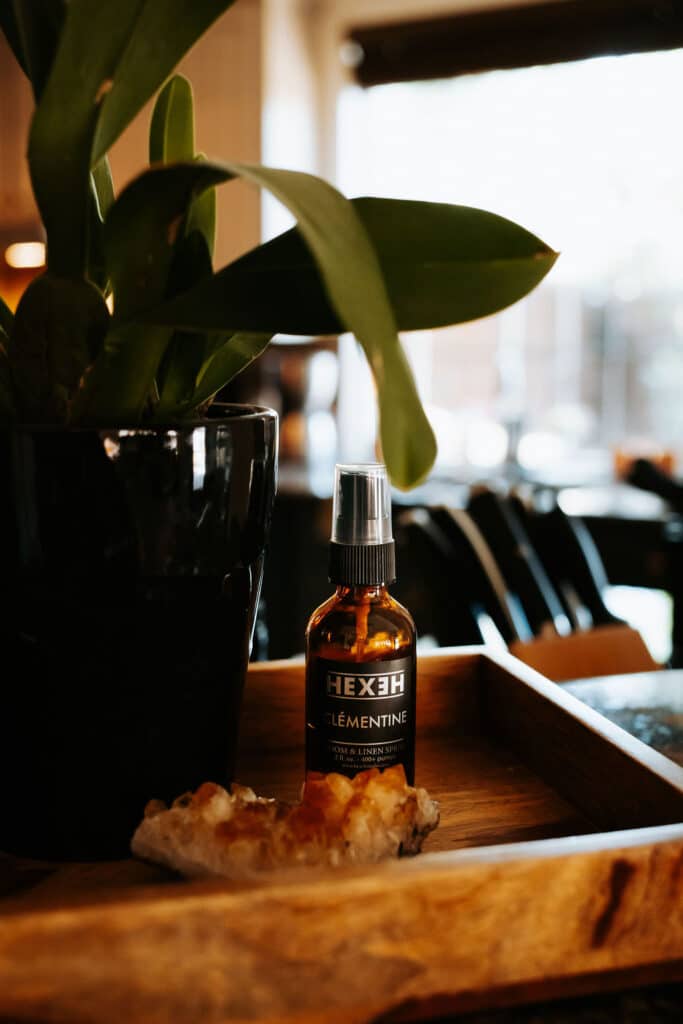
open the windows (if you have them in them space). spritz the cleared area with something uplifting. ring a bell. set out a little bowl of salt for 24 hours.
think of this step like resetting the operating system. you’re not only removing stuff; you’re making an intentional break with the pattern that encouraged its accumulation.
when clear the shelves without changing the habits behind the piles, it’s oh-so easy to find yourself right back where you started.
and on that note…remember this:
clutter isn’t always a ‘stuff’ problem; sometimes it’s a conversation you haven’t had. sometimes it’s the decision to postpone decisions. and sometimes it’s a pattern that hasn’t been fully cleared.
most of all, the goal isn’t to have less stuff for the sake of having less stuff. it’s to make sure what you keep supports the life you’re living NOW – and that’s a very different conversation. xo